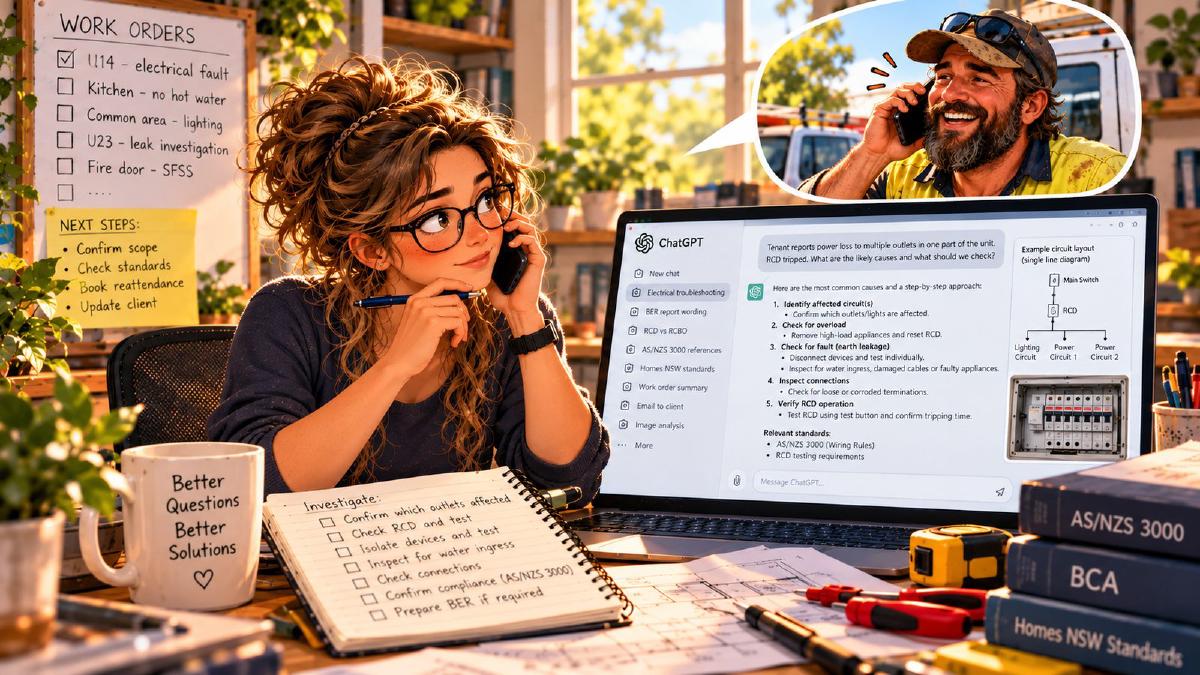
I’ve discovered something mildly uncomfortable about myself.
I find it difficult not to say please and thank you to ChatGPT.
Which is ridiculous, because ChatGPT doesn’t need me to be polite.
It won’t go home and complain that I was rude during a JSON validation exercise.
At least, I sincerely hope not.
😂
But I’ve noticed that I communicate quite differently depending on what I’m doing.
In one ChatGPT conversation, we’re discussing philosophy, writing articles, and occasionally organising boxing matches between plumbing infrastructure and gravity.
In another, I’m building an automation workflow.
“Update this.”
“Test that.”
“Okay, next.”
Very efficient.
Slightly uncomfortable.
And it got me thinking about how I’ve spent most of my life adapting the way I communicate with people, too.
Learning the Language of the Conversation#
My parents were missionaries and pastors.
One of the benefits of growing up in that environment was meeting people of all ages, cultures, and backgrounds, sometimes without even sharing a language.
According to Mum, I was happily talking to just about everyone by the age of two.
Apparently, I started stakeholder engagement rather early.
😂
All that practice meant I developed different ways of communicating with different people.
These days, much of it happens automatically.
Until I encounter someone whose communication style I haven’t quite figured out.
Then the research department has to reopen.
What Does This Conversation Need?#
At work, I speak with tradespeople who have very different approaches to communication.
Some enjoy a long conversation, working through the details together.
Others want a quick update and to get back to work.
And some will call and announce:
“I just need to vent.”
Wonderful.
Thank you for specifying the requirements.
😂
But not everyone tells you what they need.
Sometimes I have to work it out as the conversation develops.
Are we solving a problem?
Sharing information?
Working through a decision?
Or does this person just need someone to listen for five minutes?
I particularly enjoy the conversations where I can simply ask:
“What do you need from me in this conversation?”
And get an answer.
Because then neither of us has to guess.
Finding the Happy Medium#
When I was younger, I tended to adapt much further towards the other person’s preferred way of communicating.
Now I’m more interested in finding a happy medium.
I can adjust my approach without abandoning my own preferences.
Sometimes I’m chatty.
Sometimes I’m direct.
Sometimes I’m listening.
Sometimes I’m asking an unreasonable number of questions because something doesn’t make sense yet.
The delivery changes depending on the person and the purpose.
But it’s still me.
And I think that matters.
Adapting your communication shouldn’t mean disappearing into whatever someone else needs you to be.
It should help you understand each other.
Which brings me back to ChatGPT.
I know perfectly well that a technical workflow doesn’t require the same conversational niceties as a discussion about Greek mythology.
I understand why direct instructions are useful.
And yet there’s still a tiny part of my brain going:
You could have said please.
😂
Same person. Different conversation.
Although I reserve the right to thank ChatGPT for fixing my JSON.
Old habits.
😂